Harshavardhana belonged to the Pushyabhuti family of Sthanvishvara (Thanesar, in today's Haryana). His father Prabhakaravardhana had made the small kingdom a power in the north. We know his early life unusually well because his court poet Banabhatta wrote a prose biography of him, the Harshacharita, and because the Chinese monk Xuanzang lived in his realm for several years and described it.
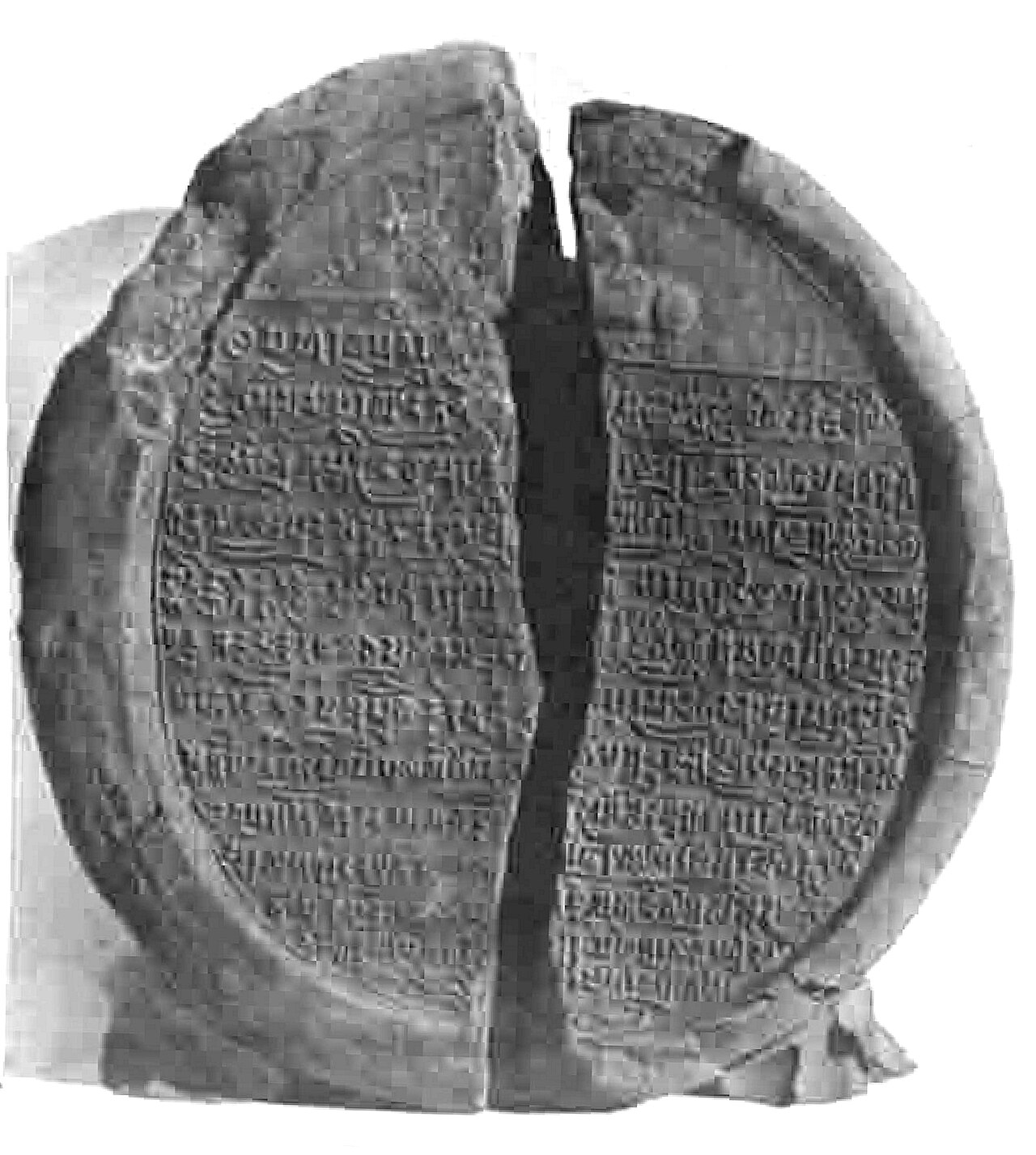
कर्मणा मनसा वाचा कर्तव्यं प्राणिभिर्हितम्। हर्षेणैतत्समाख्यातं धर्मार्जनमनुत्तमम्॥"By deed, by mind and by word one should do good to living beings: this, Harsha has declared, is the highest way of earning merit."Closing verse of Harsha's Banskhera copper-plate grant, which also carries his own signature
His reign began in 606 CE, the starting year of the Harsha era that was used in parts of North India for some centuries after him.
A throne won in grief
Bana tells a story of swift misfortune. Prabhakaravardhana died of illness; soon after, the king of Malwa killed Grahavarman, the Maukhari king of Kanyakubja and husband of Harsha's sister Rajyashri, and imprisoned her. Harsha's elder brother Rajyavardhana marched out, defeated the Malwa king, but was then killed by Shashanka, king of Gauda in Bengal — treacherously, according to Bana. Harsha, still about sixteen, took up the throne and the war.
Rajyashri had escaped into the Vindhya forest. Bana describes Harsha finding her just as she was about to enter a funeral fire. With the Maukhari line broken, Harsha took charge of Kanyakubja as well, and made that city his capital.
Empire and its limits
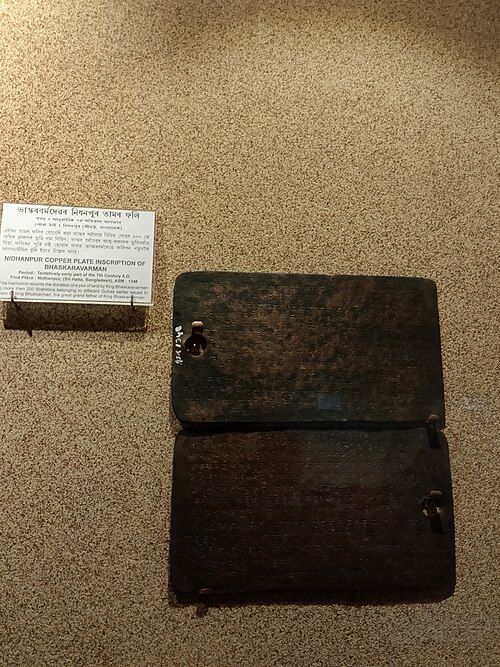
Over the following years Harsha brought most of the Ganga plain under his rule or influence, from Punjab to parts of Bengal and Odisha, and made an alliance with Bhaskaravarman of Kamarupa against Shashanka. His push south was stopped on the Narmada by the Chalukya king Pulakeshin II; the Aihole inscription of 634 CE boasts that Harsha's "joy" (harsha) melted away in that defeat. The date of the battle is uncertain — estimates range from about 618 to the early 630s. In 641 he sent an embassy to the Tang emperor of China.
Xuanzang and the great assemblies
Xuanzang describes Harsha as tireless, touring his lands and holding court in camp. He records a great religious assembly at Kanyakubja in 643 CE, attended by many kings, at which Xuanzang himself expounded Mahayana teaching. He also describes the assembly at Prayag, at the meeting of the Ganga and Yamuna, held every five years, where Harsha gave away the wealth of his treasury to Buddhist monks, brahmins, Jains, the poor and orphans, until — the pilgrim says — he had to borrow a garment from his sister. Historians note that Xuanzang, a Buddhist, may have emphasised Harsha's Buddhist leanings; Harsha's own inscriptions call him a devotee of Shiva.
The poet-king
Three Sanskrit plays are credited to Harsha: the light court comedies Ratnavali and Priyadarshika, and Nagananda, the story of a prince who gives his life to save the serpents from Garuda. Nagananda opens with a prayer to the Buddha and is still studied as a drama of compassion. Whether the king wrote every line himself has been debated since medieval times, but tradition and the plays' own prologues name him as author. He also gathered poets around him, Bana chief among them.
How they are remembered
Harsha was the last great emperor of ancient North India to rule from the Ganga plain before the age of regional kingdoms. After his death without an heir, his empire fell apart. But Kanyakubja, which he raised to greatness, remained the prize of North Indian politics for three centuries, and Bana's Harshacharita and Kadambari became classics of Sanskrit prose.
Ekatmata Stotra · Stanza 22
Named in Stanza 22 of the Ekatmata Stotra — the architects of empire — Chanakya to Bappa Rawal.
चाणक्यश्च चन्द्रगुप्तो विक्रमादित्यशालिवाहनौ।
समुद्रगुप्तो हर्षः शैलेन्द्रो बप्पारावलः॥
Sources: Wikipedia: Harsha · Wikipedia: Banskhera inscription · Wikipedia: Harshacharita. Written afresh for The Hindu Book; corrections welcome at [email protected].