According to the Bala Kanda of the Valmiki Ramayana, King Janaka of Mithila was ploughing a field to prepare for a sacrifice when he found a baby girl in the furrow. He named her Sita — "furrow" — and raised her as his own daughter. Because she was not born of a womb she is called Ayonija, and because she came from the earth she is Bhumija, daughter of Bhudevi. As Janaka's daughter she is Janaki, and as the princess of Videha, Vaidehi.
अग्रतस्ते गमिष्यामि मृद्नन्ती कुशकण्टकान्“I shall walk ahead of you, treading down the kusha grass and thorns.”Valmiki Ramayana, Ayodhya Kanda — Sita to Rama, insisting on going into exile
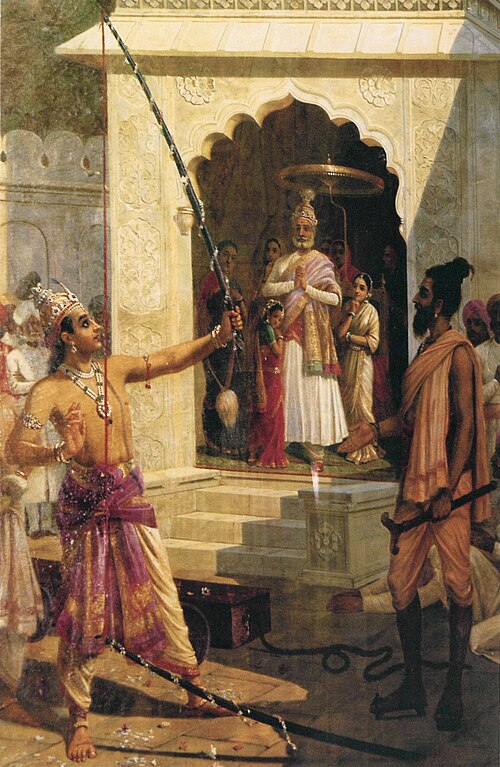
Janaka had in his keeping the great bow of Shiva, and he declared that only the man who could string it would marry Sita. Many kings failed. When the young Rama came to Mithila with the sage Vishvamitra, he lifted the bow and broke it as he strung it, and Sita garlanded him.
Valmiki describes her as Rama's equal in virtue and beauty. The years they spent together in Ayodhya before the exile — twelve, Sita later tells Ravana — are passed over briefly, as a time of happiness.
Choosing the forest
When Rama was sent into exile for fourteen years, he asked Sita to stay behind in Ayodhya. In the Ayodhya Kanda she refuses: a wife's place, she says, is with her husband, and the forest with him will be dearer to her than the palace without him. She went, and with Lakshmana they lived as forest-dwellers at Chitrakuta and Panchavati, visiting the hermitages of the sages.
In Lanka
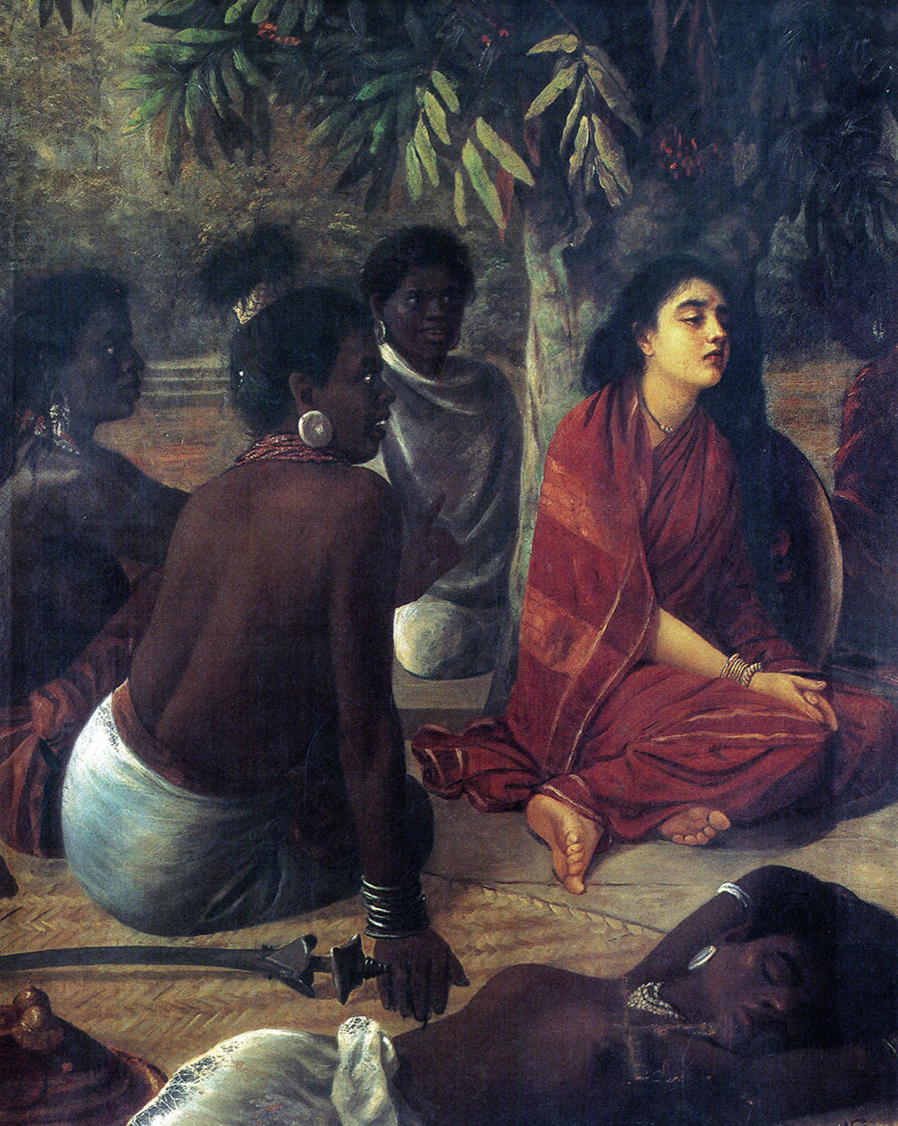
At Panchavati, the Aranya Kanda tells, the golden deer drew Rama away, and Lakshmana followed. Ravana, disguised as an ascetic, carried Sita off to Lanka. There she was held in the Ashoka grove, surrounded by guards. Ravana threatened and pleaded by turns; she would not even look at him, placing a blade of grass between them as she spoke.
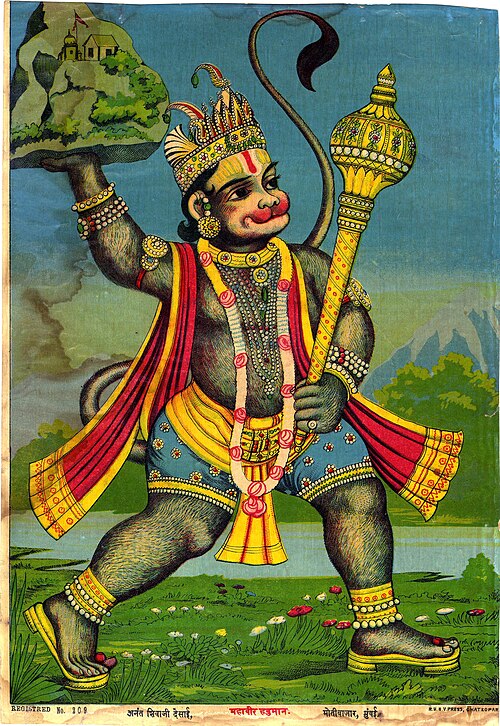
The Sundara Kanda tells how Hanuman found her, showed her Rama's ring and offered to carry her back. She declined: Rama himself, she said, must come and win her back with honour. She sent him her hair-jewel as a token.
Ravana gave her twelve months to yield, threatening to have her killed if she did not. Through those months she was comforted by the rakshasi Trijata, who dreamt of Rama's victory and warned the guards to treat her gently.
Trial and return
After Ravana's defeat, the Yuddha Kanda tells that Rama spoke harshly to Sita before the assembled army, and she entered fire to prove her purity; Agni himself brought her out unharmed. They returned to Ayodhya, and Rama was crowned.
The Uttara Kanda — which many scholars consider a later addition to Valmiki's poem — continues: because of gossip among the people, Rama sent the pregnant Sita away. She lived in Valmiki's hermitage, where she bore the twins Lava and Kusha. Years later, called again to prove herself, she asked the Earth to receive her if she had been true, and the Earth opened and took her back. Retellings differ greatly here; Tulsidas's Ramcharitmanas does not narrate the banishment at all.
How they are remembered
Sita is worshipped with Rama in every Ram temple — "Siyavar Ramchandra ki jai" — and "Sita-Ram" is one of the most common names of God on Indian lips. Sita Navami (Vaishakha Shukla Navami) marks her appearance, and Vivah Panchami her wedding, celebrated with special fervour at Janakpur and Ayodhya. For many, she is the strongest figure in the Ramayana: the one who endured most and never bent.
Ekatmata Stotra · Stanza 10
Named in Stanza 10 of the Ekatmata Stotra — ten women of itihāsa and purāṇa.
अरुन्धती अनसूया च सावित्री जानकी सती।
द्रौपदी कण्णगी गार्गी मीरा दुर्गाश्च वन्दिताः॥
Sources: Wikipedia: Sita · valmikiramayan.net · Wikipedia: Uttara Kanda. Written afresh for The Hindu Book; corrections welcome at [email protected].