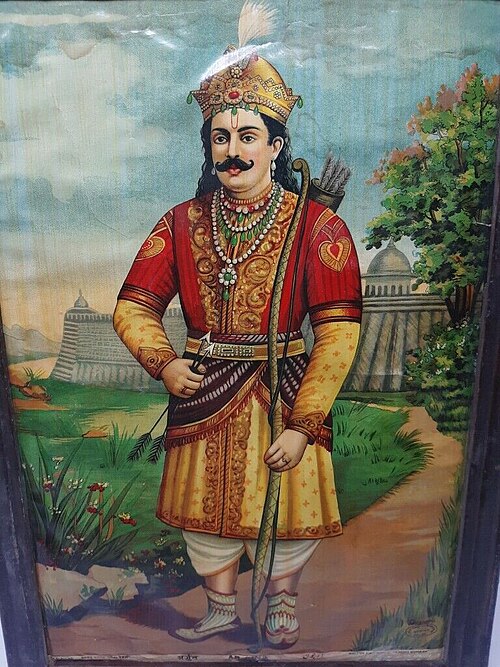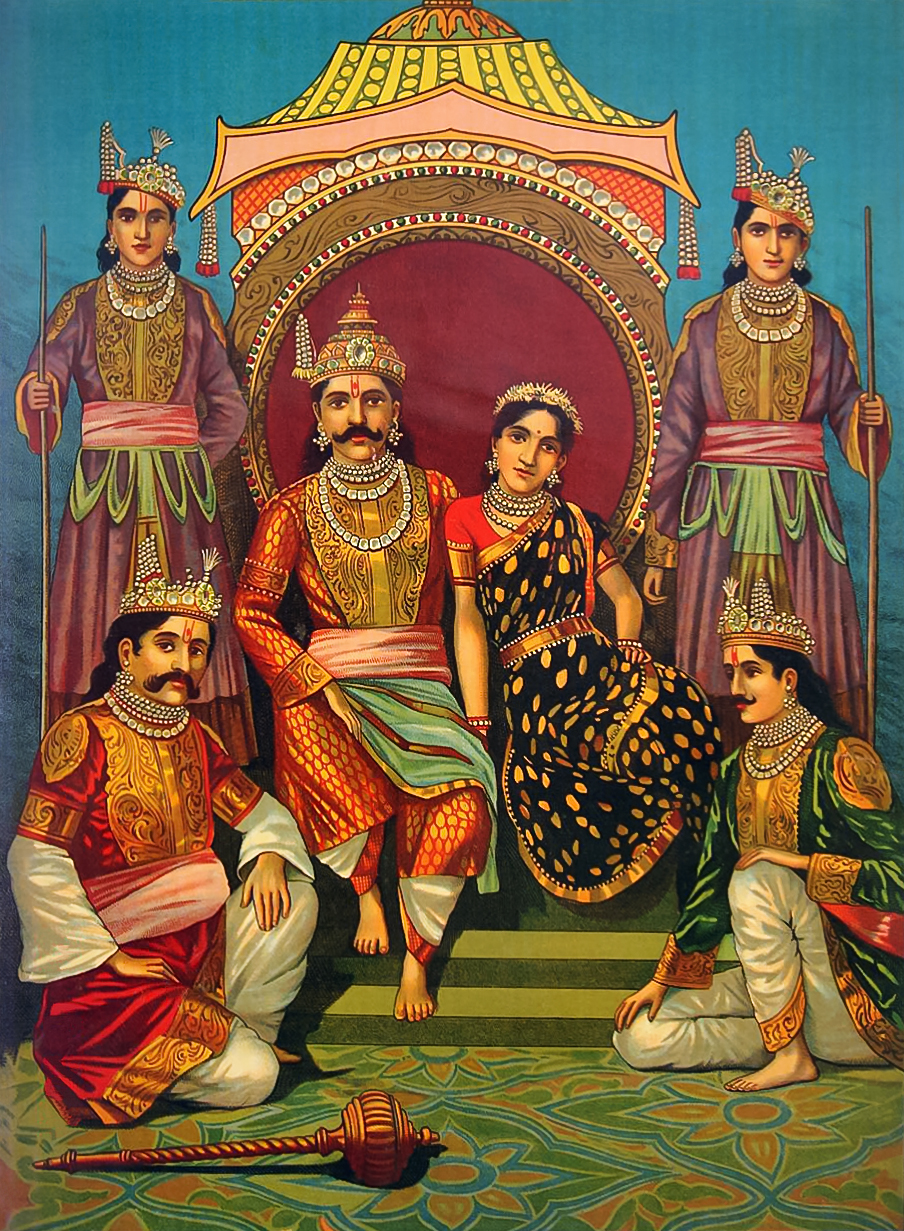
According to the Mahabharata, Kunti, wife of King Pandu, had received from the sage Durvasa a mantra by which she could call any god and bear his child. With Pandu's consent she invoked Dharma, and Yudhishthira was born — the eldest of the five Pandavas. His name means "steady in battle", but he is better known as Dharmaraja, king of righteousness, and as Ajatashatru, "one whose enemy was never born".
अहन्यहनि भूतानि गच्छन्तीह यमालयम्। शेषाः स्थावरमिच्छन्ति किमाश्चर्यमतः परम्॥“Day after day creatures go to the abode of Death, yet those who remain wish to live forever. What could be more wondrous than this?”Mahabharata, Vana Parva — Yudhishthira's answer in the Yaksha Prashna
Raised in Hastinapura after Pandu's death, he was trained by Drona and was renowned less for arms than for truthfulness, learning and fairness. His cousin Duryodhana's hostility shadowed his whole life.
Indraprastha and the dice
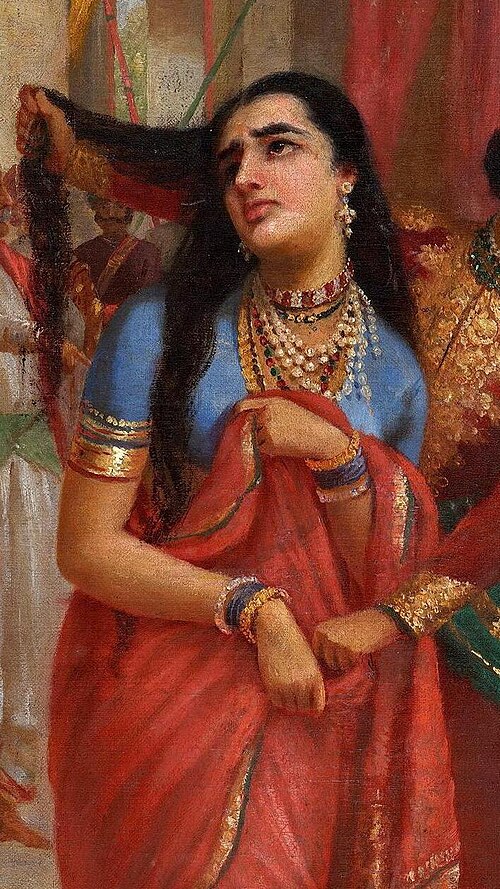
After escaping the house of lac and winning Draupadi, the Pandavas received half the kingdom and built Indraprastha. Yudhishthira performed the Rajasuya sacrifice, proclaiming his supremacy. Envious, Duryodhana invited him to a game of dice against his uncle Shakuni. Bound, as he saw it, never to refuse a challenge, Yudhishthira played and lost his wealth, kingdom, brothers, himself and finally Draupadi. The Sabha Parva does not spare him: the epic presents the game as his great failing. The Pandavas were sent into exile for twelve years, and a thirteenth in disguise.
Earlier, Vidura's warning, given in a coded speech that only Yudhishthira understood, had saved the Pandavas from the burning of the house of lac at Varanavata.
The Yaksha's questions
Near the end of the exile, the Vana Parva tells, the brothers searched for water. One by one Nakula, Sahadeva, Arjuna and Bhima drank from a lake despite a voice forbidding them, and fell dead. Yudhishthira came last and agreed to answer the questions of the Yaksha who guarded it. Asked what is swifter than wind, he said the mind; what is more numerous than grass, thoughts; what is the greatest wonder, that every day people die, yet the living think themselves immortal.
Pleased, the Yaksha offered to revive one brother. Yudhishthira chose Nakula — so that Madri, too, would have a living son. The Yaksha revealed himself as Dharma, his father, and restored them all.
The half-truth
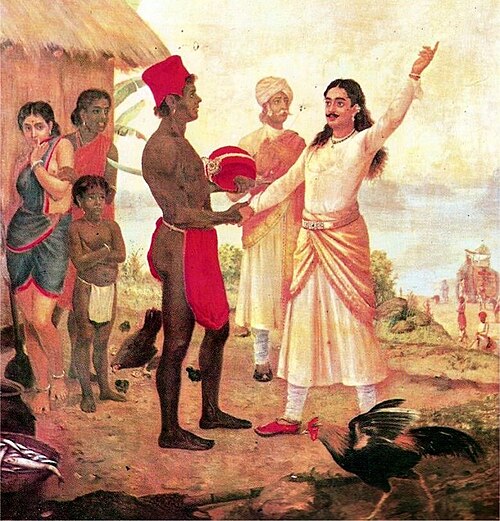
During the war, the Drona Parva tells, the Pandavas could not overcome their teacher Drona. On Krishna's counsel, Bhima killed an elephant named Ashvatthama, and Yudhishthira — whose word Drona trusted — announced that Ashvatthama was dead, adding "the elephant" so softly that Drona did not hear. Drona, thinking his son slain, laid down his arms. The epic says that Yudhishthira's chariot, which had always moved a little above the ground, touched the earth from that moment.
The dog at heaven's gate
After the war Yudhishthira ruled for thirty-six years. Then the Pandavas and Draupadi set out for the Himalayas. One by one the others fell; only Yudhishthira and a dog that had followed them remained. When Indra came to take him to heaven in his chariot, Yudhishthira refused to go without the dog, which had been loyal to him. The dog revealed itself as Dharma, and the Mahaprasthanika Parva counts this as his final test.
How they are remembered
Yudhishthira is the Mahabharata's great study of what dharma demands — and how hard it is to live by. He is honoured for his truthfulness, patience and compassion, and questioned for the dice game and the half-truth. His dialogues with the Yaksha and with Bhishma remain among the most quoted passages of Indian thought.
Ekatmata Stotra · Stanza 12
Named in Stanza 12 of the Ekatmata Stotra — ten figures from the great epics.
रामो भरतश्च कृष्णो भीष्मो धर्मपुत्र: तथा।
अर्जुनो मार्कण्डेय: हरिश्चन्द्र: प्रह्लादो नारदस्तथा॥
Sources: Wikipedia: Yudhishthira · Wikipedia: Yaksha Prashna · sacred-texts.com/hin/maha/index.htm. Written afresh for The Hindu Book; corrections welcome at [email protected].